

Cosmetic Chemicals Market Size Estimated at USD 26.86 Bn in 2026 Projected to More Than Double to USD 52.14 Bn by 2035
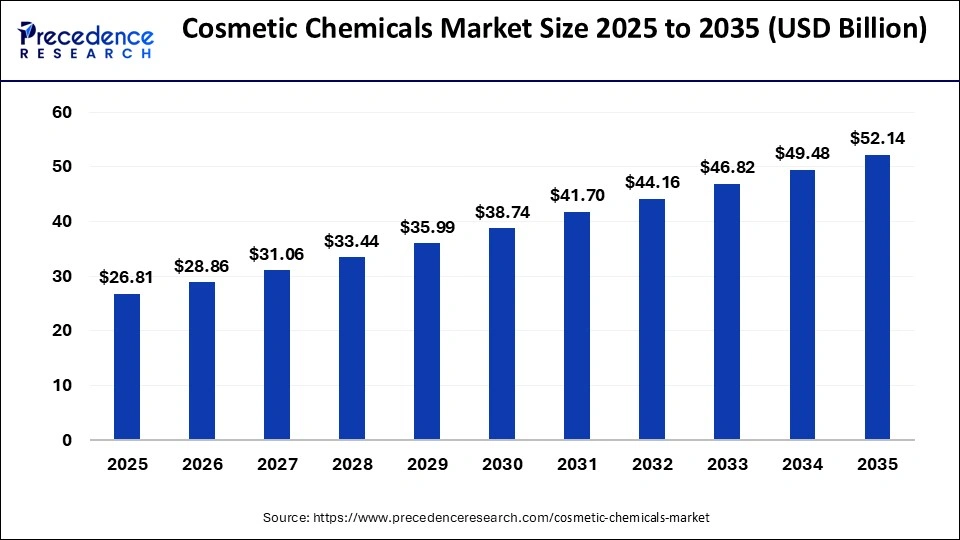
According to Precedence Research, the global cosmetic chemicals market size is valued at USD 26.81 billion in 2026 and is expected to reach nearly USD 52.14 billion by 2035, with a CAGR of 6.88% from 2026 to 2035.
Ottawa, Jan. 29, 2026 (GLOBE NEWSWIRE) -- The global cosmetic chemicals market size was USD 26.81 billion in 2025 and is estimated to grow from USD 26.86 billion in 2026 to USD 52.14 billion by 2035, growing at a CAGR of 6.88% between 2026 and 2035. The increased utilization of men’s grooming products and high preference for clean products drive the market growth.
The Complete Study is Now Available for Immediate Access | Download the Sample Pages of this Report@ https://www.precedenceresearch.com/sample/2000
Cosmetic Chemicals Market Key Points
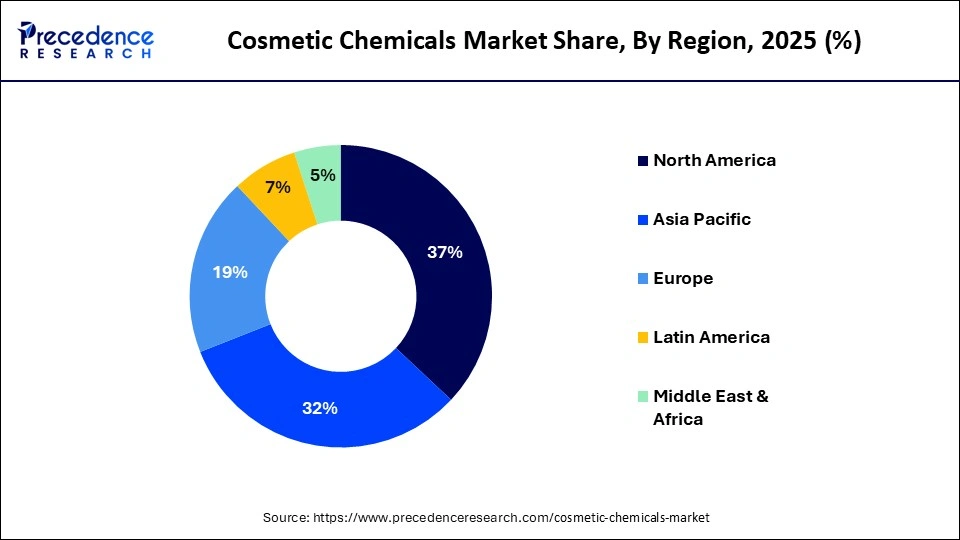
- North America dominated the cosmetic chemicals market, holding the largest share of 37% in 2025.
- Asia Pacific is projected to grow at the fastest CAGR between 2026 and 2035.
- By product type, the emollients and moisturizers segment accounted for the highest market share in 2025.
- The preservatives segment is expected to register strong CAGR growth from 2026 to 2035.
- By application, the skin care segment captured the largest share of the market in 2025.
- The hair care segment is anticipated to grow at a healthy CAGR over the forecast period (2026–2035).
What are Cosmetic Chemicals?
The cosmetic chemicals market is driven by the growing personal grooming industry, rising spending on personal care products, increased awareness of self-care, a shift towards organic products, a focus on a youthful look, growing concerns about hair & skin, and the expansion of e-commerce.
Cosmetic chemicals are ingredients used in the production of personal care or cosmetic products. The functions of cosmetic chemicals are moisturizing, UV protection, cleansing, softening, preservation, emulsification, and providing fragrance. The various chemicals are titanium oxide, parabens, cetearyl alcohol, glycerin, mica, and others. Cosmetic chemicals are widely used in products such as sunscreens, shampoos, lipsticks, moisturizers, conditioners, and many others.
➡️ Become a valued research partner with us https://www.precedenceresearch.com/schedule-meeting
Cosmetic Chemicals Market Size Analysis by Segments from 2022 to 2024
Global Cosmetic Chemicals Market Size (USD Million), By Product Type, 2022 – 2024
| Product Type | 2022 | 2023 | 2024 |
| Surfactants | 6,668.2 | 7,194.8 | 7,194.8 |
| Emollients & Moisturizers | 6,812.6 | 7,391.3 | 8,012.7 |
| Film-Formers | 2,676.4 | 2,884.6 | 3,108.6 |
| Colorants & Pigments | 1,283.8 | 1,371.0 | 1,371.0 |
| Preservatives | 902.5 | 969.7 | 1,041.8 |
| Emulsifying & Thickening Agents | 1,132.9 | 1,220.0 | 1,313.6 |
| Single-Use Additives | 700.3 | 752.6 | 808.6 |
| Others | 2,964.8 | 3,127.8 | 3,302.7 |
Global Cosmetic Chemicals Market Size (USD Million), By Application, 2022 – 2024
| Application | 2022 | 2023 | 2024 |
| Skin Care | 8,052.6 | 8,713.1 | 9,427.1 |
| Hair Care | 6,057.4 | 6,537.7 | 7,055.6 |
| Makeup | 3,323.0 | 3,561.5 | 3,816.6 |
| Oral Care | 2,564.6 | 2,737.1 | 2,920.7 |
| Fragrances | 1,905.5 | 2,046.5 | 2,197.8 |
| Others | 1,238.7 | 1,315.9 | 1,396.6 |
Immediate Delivery Available | Buy This Premium Research Report@ https://www.precedenceresearch.com/checkout/2000
Major Sustainability Trends in the Cosmetic Chemicals Industry:
- Biotechnology and Lab-Grown Actives: Manufacturers are increasingly using fermentation and cell culture to produce nature-identical compounds, such as lab-grown collagen and hyaluronic acid, to eliminate the need for land-intensive farming or animal harvesting.
- Upcycled Ingredient Integration: Chemicals derived from agricultural and food industry byproducts, such as coffee grounds or fruit peels, are being transformed into high-performance actives to minimize waste and support a circular economy.
- Waterless and Concentrated Formulations: To reduce water footprint and transportation-related carbon emissions, there is a surge in solid cleansers, powder-to-foam washes, and concentrated serums that replace traditional water-heavy formulas.
- Green Chemistry for Next-Gen Reformulation: Prompted by new 2025 regulations like the EU Green Deal, companies are reformulating products with non-toxic, biodegradable alternatives to microplastics, PFAs, and endocrine disruptors.
-
Digital Traceability and Transparency: The implementation of digital product passports and QR codes on packaging now allows consumers to track an ingredient's entire journey, from its ethical sourcing origin to its environmental impact during production.
Cosmetic Chemicals Market Trends
- Shift to Natural and Organic Ingredients: Consumers are increasingly seeking products with "clean labels," free from synthetic additives and perceived harmful chemicals like parabens and sulfates. This trend is pushing manufacturers to invest heavily in research and development of plant-based emollients, bio-based surfactants, and natural preservatives derived from sources like essential oils and botanical extracts.
- Personalization and Multifunctional Formulations: There is a growing interest in customized beauty solutions and hybrid products that offer multiple benefits in a single application (e.g., anti-aging, hydration, and sun protection). This requires the use of innovative active ingredients like peptides and hyaluronic acid, often supported by AI and data-driven insights to tailor formulations to individual needs.
-
Technological Advancements, including Biotechnology and AI: Innovations in biotechnology, such as using fermentation and cell culture to create sustainable, lab-grown ingredients, are gaining traction in the market. Additionally, the expansion of e-commerce is bolstered by AI-powered tools like virtual try-ons and personalized product recommendations, which shape consumer behavior and boost online sales.
Built for leaders who move markets. Access live, actionable intelligence with Precedence Q. https://www.precedenceresearch.com/precedenceq/
Market Opportunity
Growing Self-Care Surges Demand for Cosmetic Chemicals
The increasing consumer knowledge about self-care and holistic wellness focus increases demand for cosmetic and personal care products. The increased awareness of skin health and a strong focus on treating skin concerns increase the use of ingredients like retinoids and peptides. The expansion of self-care practices increases demand for products that provide hydration and prevent aging.
The consumer focus on the development of tailored products and the rise of self-care in Gen Z & millennials increases demand for cosmetic chemicals. The shift towards at-home self-care rituals increases the use of products like facial serums, facial masks, and body washes. The growing self-care creates an opportunity for the growth of the cosmetic chemicals industry.
Cosmetic Chemicals Market Report Coverage
| Report Highlights | Details |
| Market Size in 2025 | USD 26.81 Billion |
| Market Size in 2026 | USD 28.86 Billion |
| Market Size by 2035 | USD 52.14 Billion |
| Growth Rate (2025 – 2034) | CAGR of 6.88% |
| Dominating Region | North America |
| Fastest Growing Region | Asia Pacific |
| Base Year | 2025 |
| Forecast Period | 2026 to 2035 |
| Segments Covered | Product Type, Application, Geography |
| Regions Covered | North America, Europe, Asia-Pacific, Latin America, and Middle East & Africa |
➤ Access the Full Autonomous Vehicle Market Study @ https://www.precedenceresearch.com/cosmetic-chemicals-market
Cosmetic Chemicals Market Regional Insights
Why North America Dominates the Cosmetic Chemicals Market?
North America dominated the market in 2025. The increased consumer spending on beauty products and the high consumer preference for natural products require cosmetic chemicals. The strong focus on skin health and robust e-commerce platforms requires cosmetic chemicals. The expansion of male grooming and increasing investment in bio-based ingredients help market growth. The presence of key players like Estee Lauder, L’Oreal, and P&G drives the overall market growth.
What is the U.S. Autonomous Vehicle Market Size in 2026?
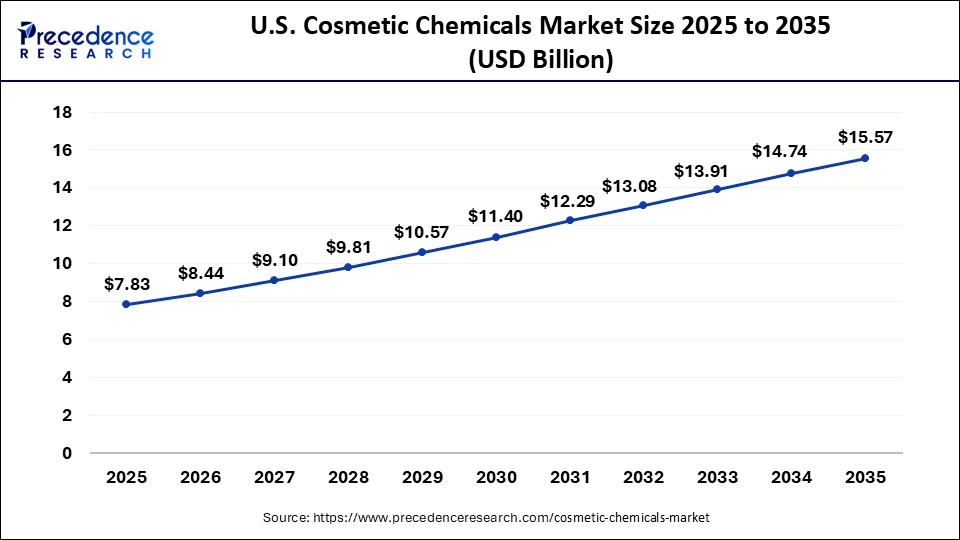
According to Precedence Research, the U.S. cosmetic chemicals market size is valued at USD 8.44 billion in 2026 and is expected to surpass around USD 15.57 billion by 2035 with a CAGR of 7.12% from 2026 to 2035.
Note: This report is readily available for immediate delivery. We can review it with you in a meeting to ensure data reliability and quality for decision-making.
Try Before You Buy – Get the Sample Report@ https://www.precedenceresearch.com/sample/2000
U.S. Cosmetic Chemicals Market Trends
The U.S. market is booming, driven by massive demand for "clean beauty," natural, and sustainable ingredients, pushing innovation in bio-based and multifunctional compounds for skincare, hair care, and personal grooming. U.S. cosmetic chemicals is generally less restrictive than some other regions (eg, EU), leading to debates over ingredient safety standards and ongoing industry adjustments. Advocacy groups and some states have pushed for tighter limits on certain chemicals.
How is Asia Pacific experiencing the Fastest Growth in the Cosmetic Chemicals Industry?
Asia Pacific is experiencing the fastest growth in the market during the forecast period. The growing consumer preference for personalized products and the increased adoption rate of daily skincare routines increase demand for cosmetic chemicals. The high spending on premium beauty products and the rise in interest in cosmeceuticals require cosmetic chemicals. The growing popularity of K-beauty and the presence of beauty culture support the overall market growth.
South Korea Cosmetic Chemicals Market Trends
South Korea’s market is witnessing rapid growth as consumers increasingly prefer clean, natural, and sustainably sourced ingredients, mirroring broader K-beauty trends toward transparency and ingredient safety. Botanical actives like Centella asiatica (cica), propolis, fermented ingredients, and other skin-soothing elements are particularly popular. Hyaluronic acid leads revenue share, while niacinamide is among the fastest-growing ingredient segments, underscoring continued demand for hydration.
You can place an order or ask any questions. Please feel free to contact at sales@precedenceresearch.com | +1 804 441 9344
Cosmetic Chemicals Market Segmentation
Product type Insights
Why Emollients & Moisturizers Segment Dominates the Cosmetic Chemicals Market?
The emollients & moisturizers segment dominated the market in 2025. The increased need for hydration in the skin and the increasing prevalence of skin concerns increase demand for emollients & moisturizers. The strong focus on clean beauty and increased use of superior texture products requires emollients & moisturizers. The expansion of the personal care industry and growing use of lipsticks increase demand for emollients & moisturizers, supporting the overall market growth.
The preservatives segment is the fastest-growing in the market during the forecast period. The strong focus on preventing yeast growth on products and the need to maintain the integrity of the product increase demand for preservatives. The growing use of water-based cosmetics and the focus on extending the shelf life of products require preservatives. The increased utilization of natural products and evolving safety standards requires preservatives, driving the overall market growth.
Application Insights
Which Application Dominated the Cosmetic Chemicals Market?
The skincare segment dominated the market in 2025. The increased consumer awareness about skin concerns and a strong focus on maintaining a youthful appearance increase demand for cosmetic chemicals. The growing popularity of natural-looking skin and the growing use of skincare products in daily routines increase demand for cosmetic ingredients. The increased use of multifunctional products drives the overall growth of the market.
The haircare segment is the fastest-growing in the market during the forecast period. The growing consumer knowledge about scalp health and the rise in salon-quality at-home care increase demand for cosmetic chemicals. The increased issues like dandruff, hair damage, and hair loss increase demand for haircare products. The higher utilization of products like styling, shampoos, serums, and conditioners requires cosmetic chemicals, supporting the overall market growth.
✚ Related Topics You May Find Useful:
➡️ Global Cosmetic Ingredients Market: Explore demand drivers shaping formulation innovation across skincare, haircare, and makeup
➡️ Natural Cosmetic Ingredient Market: Discover how clean-label, plant-based actives are reshaping beauty formulations
➡️ Cosmetic Polymer Ingredients Market: Track performance-driven polymers enhancing texture, stability, and sensory appeal
➡️ Cosmetic Preservatives Market: Understand how safety standards and shelf-life requirements are driving preservative innovation
➡️ Cosmetic Pigments Market: Analyze color innovation trends across makeup, skincare, and personal care products
➡️ Specialty Chemicals Market: Gain insight into high-value chemical solutions powering advanced consumer and industrial applications
➡️ Dermo-Cosmetics Market: See how science-backed skincare is bridging dermatology and beauty
➡️ Aroma Chemical Compounds Market: Explore fragrance chemistry trends influencing personal care, home care, and fine perfumery
➡️ Cosmetic Polymer Ingredients Market: Review market highlights, growth forecasts, and formulation advancements
➡️ Skin Care Products Market: Track consumer-driven demand for hydration, anti-aging, and multifunctional skincare
➡️ Anti-Aging Ingredients Market: Analyze growth fueled by peptides, retinoids, and bioactive innovation
➡️ Personal Care Ingredients Market: Discover how sustainability and performance are redefining ingredient selection
Top Companies in the Cosmetic Chemicals Market & Their Offerings:
- SOLVAY SA: Supplies sustainable, bio-based surfactants and polymers for hair and skin care.
- Croda International PLC: Provides high-performance active ingredients, botanicals, and functional additives like emulsifiers.
- Evonik Industries AG: Focuses on biotechnology-driven ingredients, including vegan collagen, ceramides, and biosurfactants.
- Stepan Company: Specializes in surfactant-based solutions for cleansing, foaming, and conditioning applications.
- Symrise: Develops sensory-driven fragrances and active ingredients that provide functional skin benefits.
- Ashland Inc: Produces rheology modifiers, biofunctionals, and preservation systems for high-end formulations.
- Dow / The Dow Chemical Company: Supplies silicone-based technologies and sensory enhancers for hair and sun care.
- Givaudan: Offers a vast portfolio of fragrances and active cosmetic ingredients focused on skin health.
- Eastman Chemical Company: Manufactures specialty materials like cellulose esters and plasticizers for formulations and packaging.
- Lonza Group: Delivers specialized microbial-based active ingredients and preservative solutions.
- Lanxess: Produces chemical intermediates, including high-performance antimicrobials and preservatives.
- BASF SE: Provides a comprehensive range of UV filters, emollients, and performance surfactants.
- P&G Chemicals: Supplies bio-based fatty alcohols and glycerin used as foundational cosmetic raw materials.
- Bayer AG: Offers pharmaceutical-grade ingredients and actives primarily used in dermocosmetic products.
-
Cargill Incorporated: Delivers nature-derived texturizers, starches, and emollients for clean-label beauty.
Recent Developments in the Cosmetic Chemicals Industry:
- In September 2025, Croda Beauty launched DS-HydroCeramide50 and 50S to enhance skin benefits. The product increases skin moisture by +13.4% and is 100% natural-origin. (Source: https://www.cosmeticsandtoiletries.com)
- In April 2025, BASF launched natural-based ingredients for personal care at in-cosmetics Global 2025. The new ingredients are Dehyton PK45 GA/RA, Verdessence Maize, and Lamesoft OP Plus. (Source: https://www.indianchemicalnews.com)
- In October 2025, P2 Science launched a green chemistry-based oil blend, CitroComplex, for sustainable hair and skin care. The ingredient is made up of Citropol DE-4, meadowfoam seed oil, and daikon radish seed extract. The ingredient is useful across applications like creams, body care, facial oils, & serums. (Source: https://www.personalcareinsights.com)
Segments Covered in the Report
By Product type
- Surfactants
- Emollients & Moisturizers
- Film-Formers
- Colorants & Pigments
- Preservatives
- Emulsifying & Thickening Agents
- Single-Use Additives
- Others
By Application
- Skin Care
- Hair Care
- Makeup
- Oral Care
- Fragrances
- Others
By Region
-
North America
- U.S.
- Canada
- Mexico
- Rest of North America
-
South America
- Brazil
- Argentina
- Rest of South America
-
Europe
-
Western Europe
- Germany
- Italy
- France
- Netherlands
- Spain
- Portugal
- Belgium
- Ireland
- UK
- Iceland
- Switzerland
- Poland
- Rest of Western Europe
-
Eastern Europe
- Austria
- Russia & Belarus
- Türkiye
- Albania
- Rest of Eastern Europe
-
Western Europe
-
Asia Pacific
- China
- Taiwan
- India
- Japan
- Australia and New Zealand,
- ASEAN Countries (Singapore, Malaysia)
- South Korea
- Rest of APAC
-
MEA
- GCC Countries
- Saudi Arabia
- United Arab Emirates (UAE)
- Qatar
- Kuwait
- Oman
- Bahrain
- South Africa
- Egypt
- Rest of MEA
- GCC Countries
Immediate Delivery Available | Buy This Premium Research Report@ https://www.precedenceresearch.com/checkout/2000
You can place an order or ask any questions, please feel free to contact at sales@precedenceresearch.com | +1 804 441 9344
Stay Ahead with Precedence Research Subscriptions
Unlock exclusive access to powerful market intelligence, real-time data, and forward-looking insights, tailored to your business. From trend tracking to competitive analysis, our subscription plans keep you informed, agile, and ahead of the curve.
Browse Our Subscription Plans@ https://www.precedenceresearch.com/get-a-subscription
About Us
Precedence Research is a worldwide market research and consulting organization. We give an unmatched nature of offering to our customers present all around the globe across industry verticals. Precedence Research has expertise in giving deep-dive market insight along with market intelligence to our customers spread crosswise over various undertakings. We are obliged to serve our different client base present over the enterprises of medicinal services, healthcare, innovation, next-gen technologies, semi-conductors, chemicals, automotive, and aerospace & defense, among different ventures present globally.
Web: https://www.precedenceresearch.com
Our Trusted Data Partners:
Towards Healthcare | Towards Packaging | Towards Chem and Materials | Towards FnB | Nova One Advisor | Market Stats Insight
Get Recent News:
https://www.precedenceresearch.com/news
For the Latest Update Follow Us:
LinkedIn | Medium | Facebook | Twitter


Legal Disclaimer:
EIN Presswire provides this news content "as is" without warranty of any kind. We do not accept any responsibility or liability for the accuracy, content, images, videos, licenses, completeness, legality, or reliability of the information contained in this article. If you have any complaints or copyright issues related to this article, kindly contact the author above.
